












Hinged Belt Conveyor
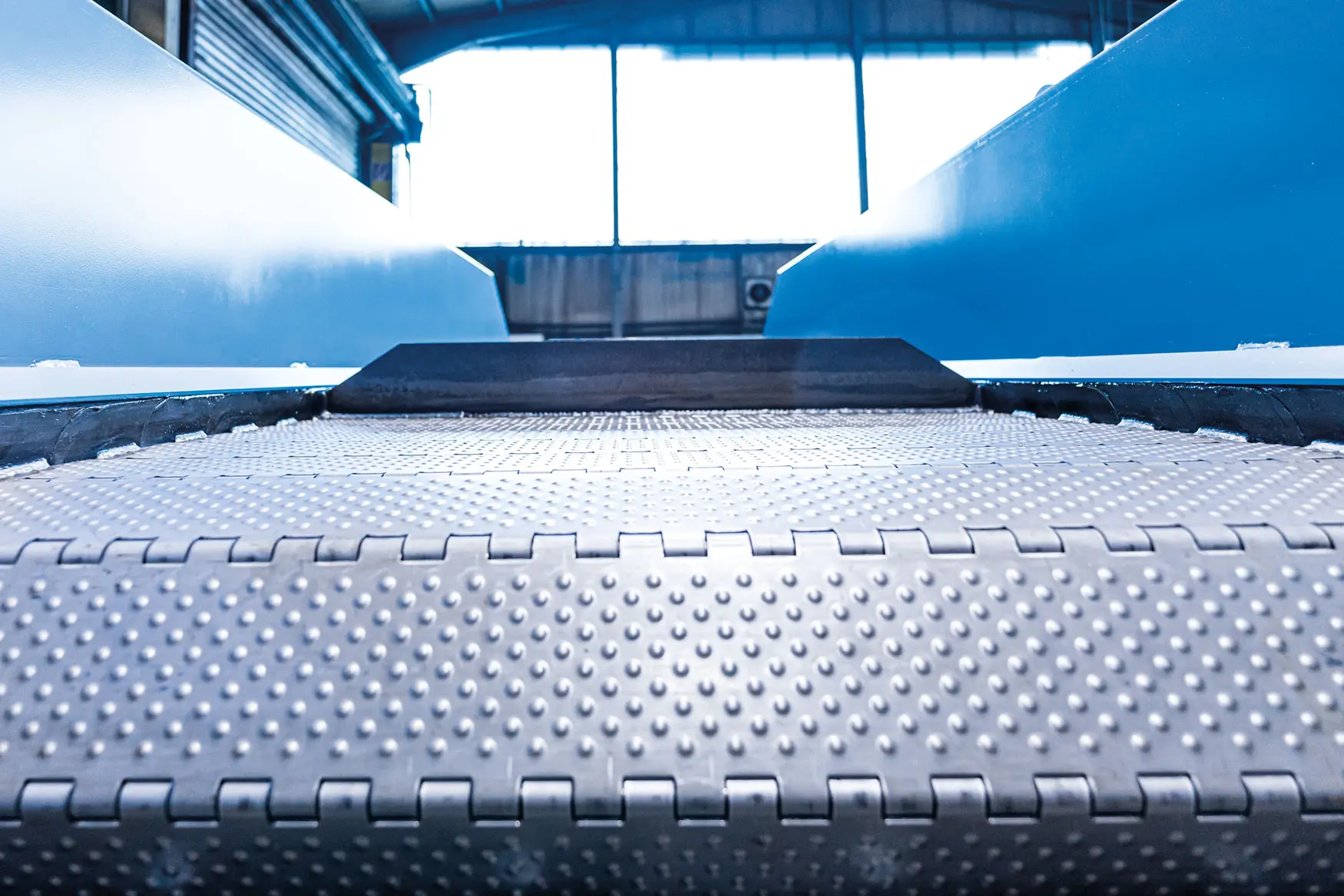
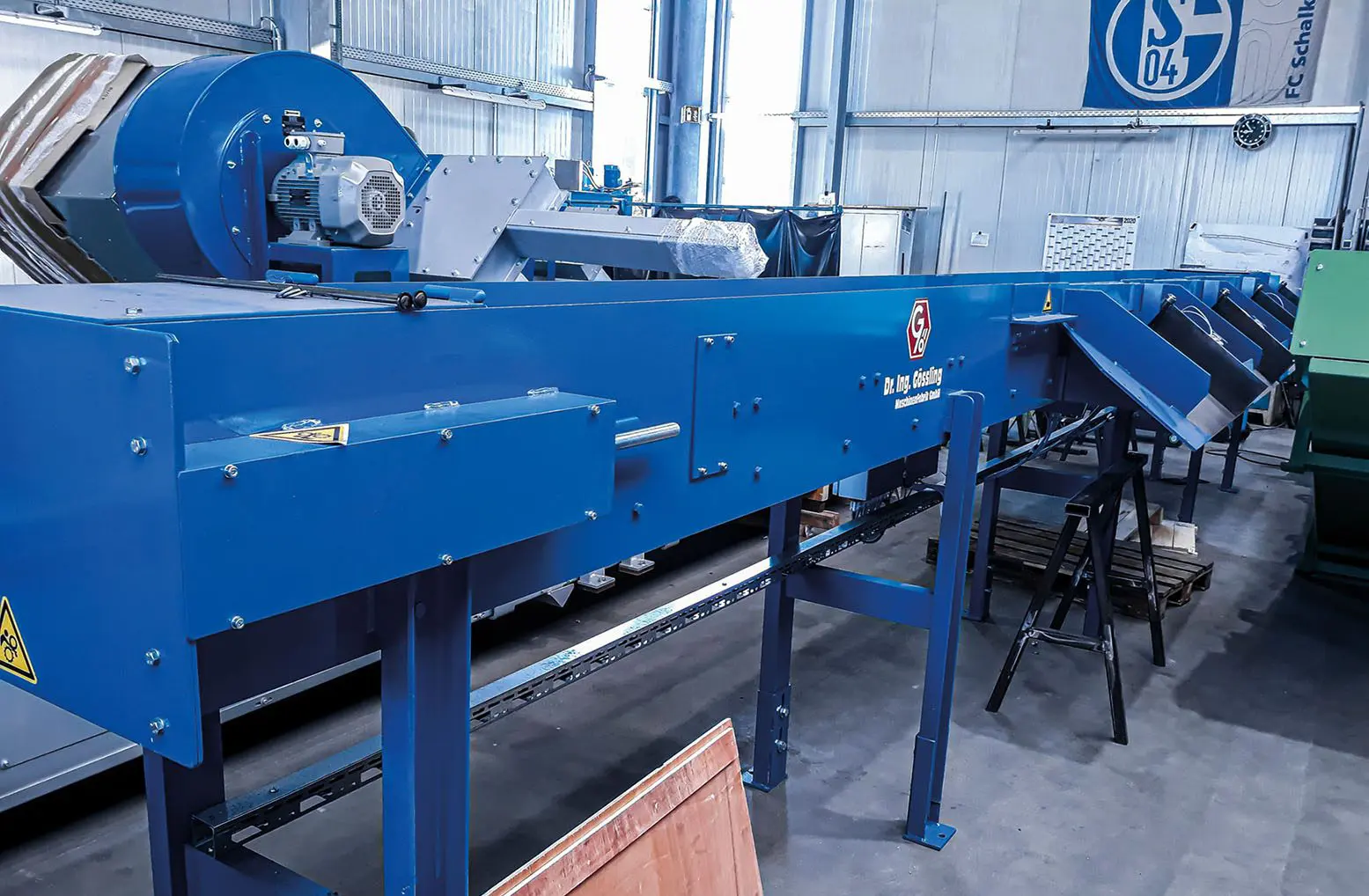
Due to their high reliability, our hinged belt conveyors are primarily used for the disposal of stamping scrap, but also for the transport of screws, die-cast components, and flash. The conveying elements consist of punched hinge segments which, together with laterally mounted trough edges and chains, are interconnected by crossbars—similar to welded belts.
Our hinged belt conveyors for the disposal of die-casting machines are designed so that die-cast parts, with their often very sharp and pointed sprues, cannot become trapped or get caught at any point.
functionality
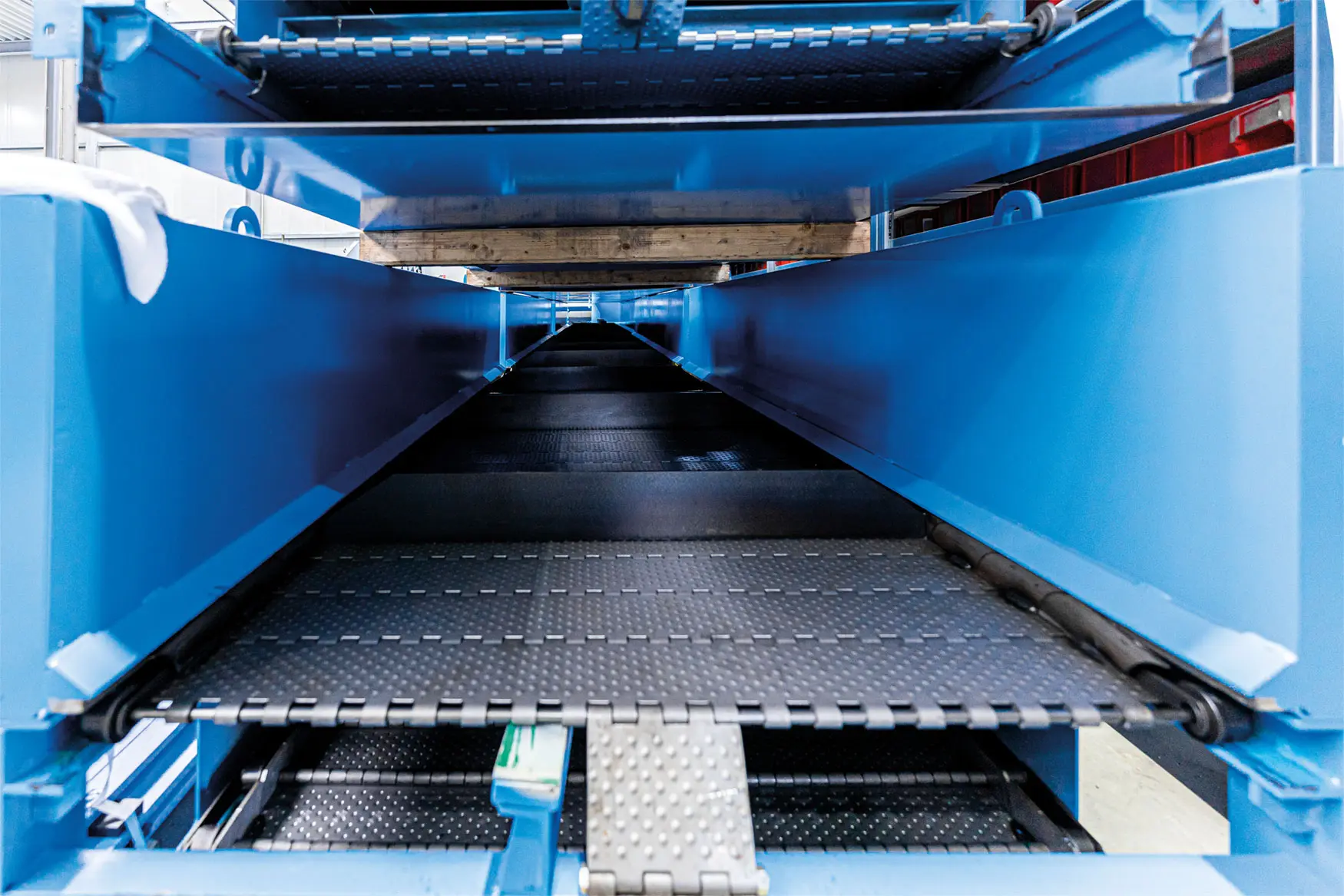
We offer complex, large collecting systems for scrap disposal that are specially designed for fully automated filling of scrap containers, including container swapping systems. The skeletal frame structure used in these systems, along with the use of rotational brushes or vibration drives that clean the belt ensure easy maintenance and consistent operation.
In heat treatment processes, Steel Hinged Belt Conveyors are used as immersion-bath conveyors for lighter weight drop forged parts (e.g. screws, bevel wheels or bearing rings ranging from 2-11 lbs. per piece) in water-, emulsion-, and oil quenching baths.
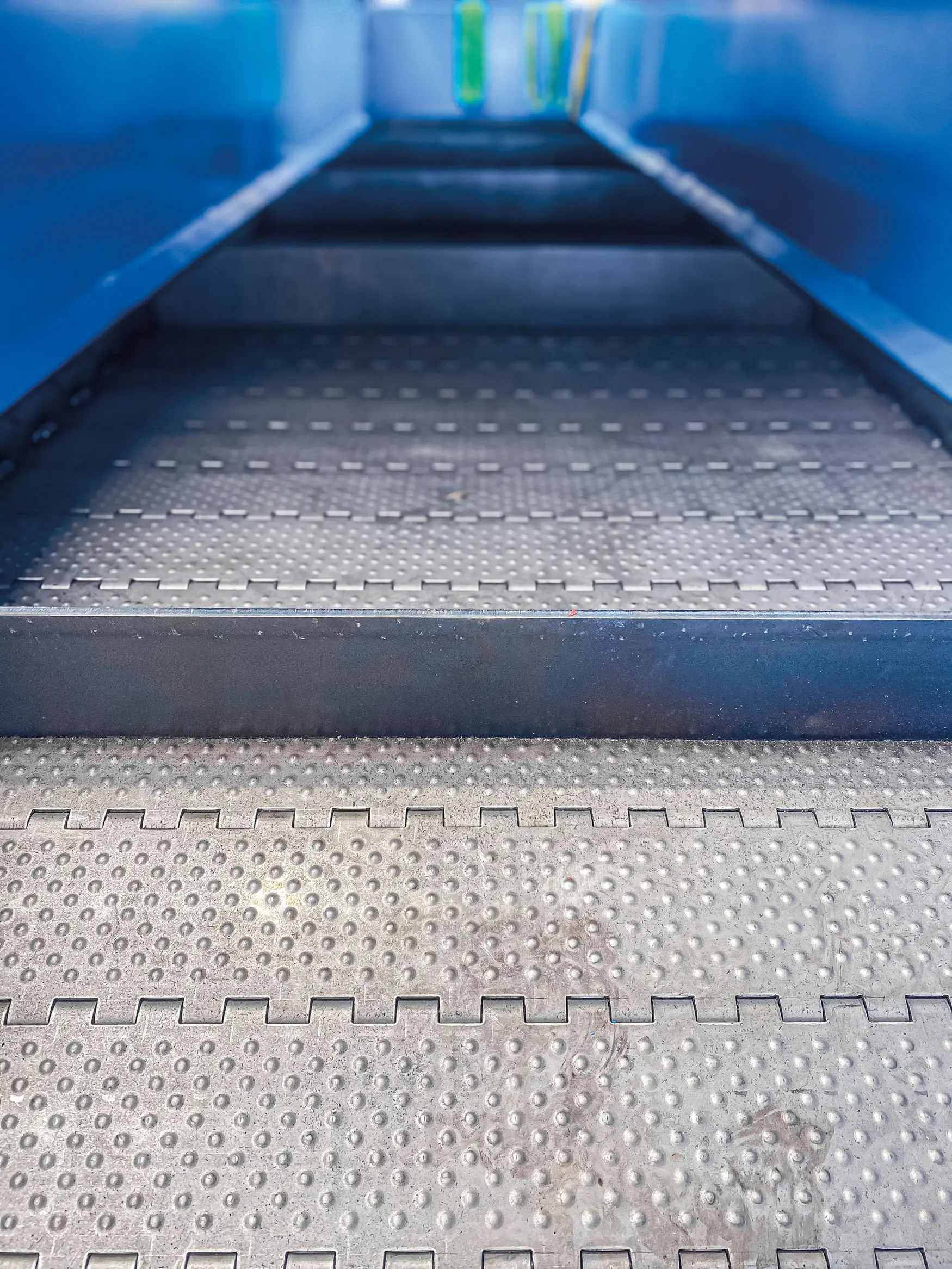
Our Hinged Belt Conveyors for the disposal of die casting waste are designed to prevent die casted parts (that often feature very sharp, pointed edges) from getting caught or trapped. The gap sizes are designed to be very small, and the hinged belt surface is even and level. Circulating side wings limit the effective belt width.
At the conveyor discharge end, a height and tilt adjustable separating roll is placed above an angled sliding surface. The roll lets small parts pass through, while larger components are conveyed laterally to be discharged along the side.
In a continuous flow, the die casted parts are separated before the next round is cast. The opening gap can be precisely adjusted by use of a hand wheel.
product details
- Chain configuration and Carriers
- Drive alternatives
- Multiple Lane and Segment reinforcement
- Surface and side-wings
- Welded or stamped Segments
- Tests with client parts
Tecnical data
| WELDED | |
| Line management | Practically any configuration possible |
| Size designations | T50 (50.8mm), T60 (63 mm), T100 (101,6 mm), T125 (125 mm), T150 (152.4 mm), T160 (160 mm) und T200 (200 mm) |
| Sheet thickness | Varies by size |
| Material | All segments are available in standard and stainless steel. The base plate is also available in hardened steel. Effective widths |
| Effective widths | 8“ up to 63“ available |
| STAMPED | |
| Line management | Practically any configuration possible |
| Size designations | T12 (12.7mm), T20 (19.05 mm), T30 (31.75 mm), T40 (38.1 mm), T50 (50,8 mm), T63 (63 mm) , T125 (125 mm), T150 (152.4 mm) |
| sheet thickness | Varies by size, for segments T63 and larger, two sheet strengths can be chosen from |
| Material | Sizes T125 and smaller are generally available in standard and stainless steel. In order to minimize gap sizes, we use cold rolled material for the sizes T12, T20 and T40. The size T30 serves as an extremely robust alternative to most standard hinged belts on the market. It features 3 mm of sheet thickness, a crossbar diameter of 10 mm and is specifically designed to be driven directly at the segment pulleys. This is available for all other sizes as well. This allows the drive chains to be eliminated. |
| Effective widths | Multiple widths up to 138“ |
| Incline conveying | up to 85° |
Applications
Hinged belt conveyors are used wherever coarse, hot, or sharp-edged material must be transported reliably, robustly, and continuously – ideal for demanding conveying tasks.
Screws, Furniture Fittings, Automotive Accessories, Household Appliances
Stamping Scrap, Electrical Components
Pressure Die Casting
Window Fittings
Robust and Flexible Solutions
The design of our Hinged Belt Conveyors and Hinged Plate Belts aims for high durability and thus optimal productivity of your production plant. We also deliver various accessories for example: Swivel slides and multi-track switches.
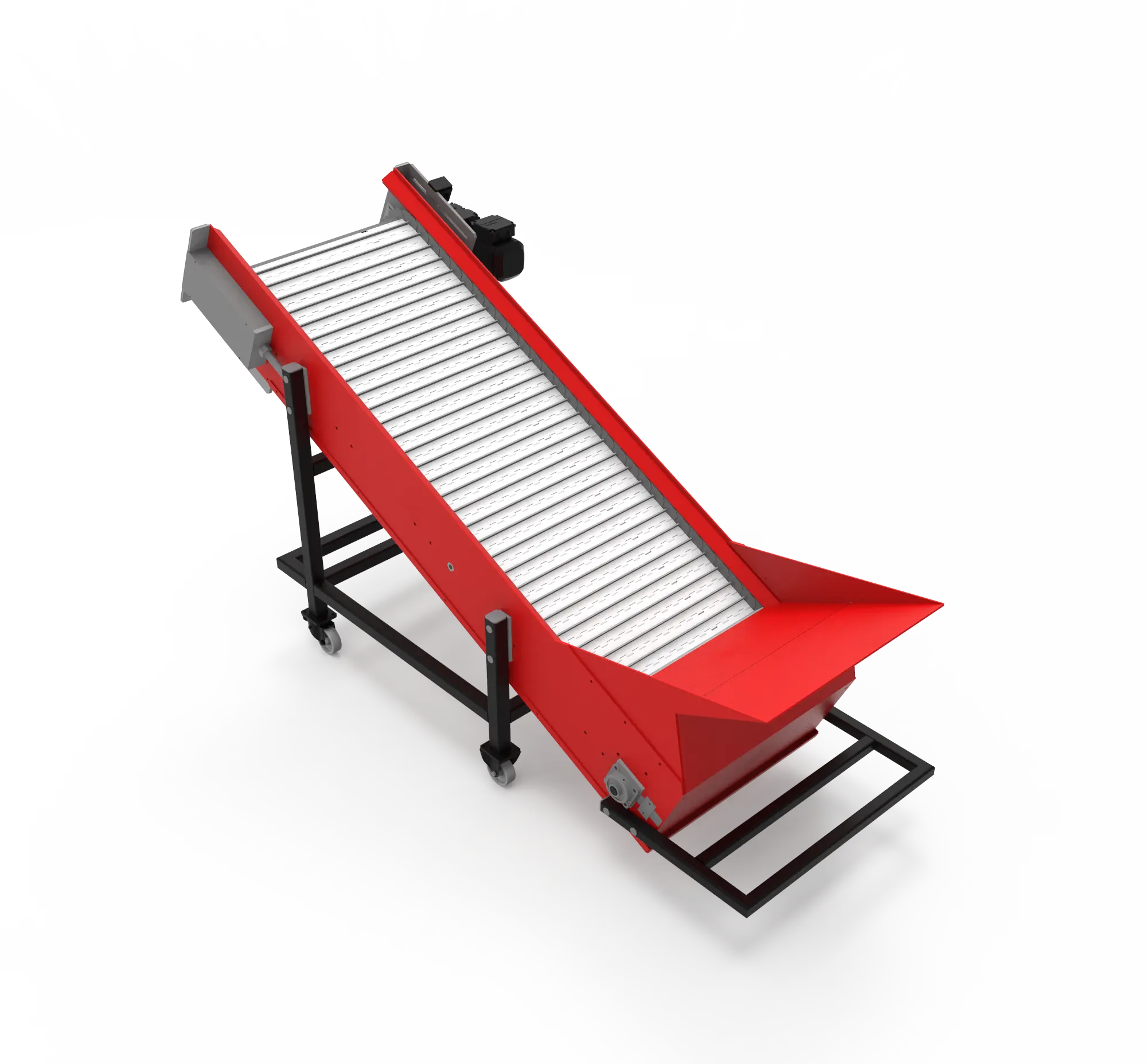
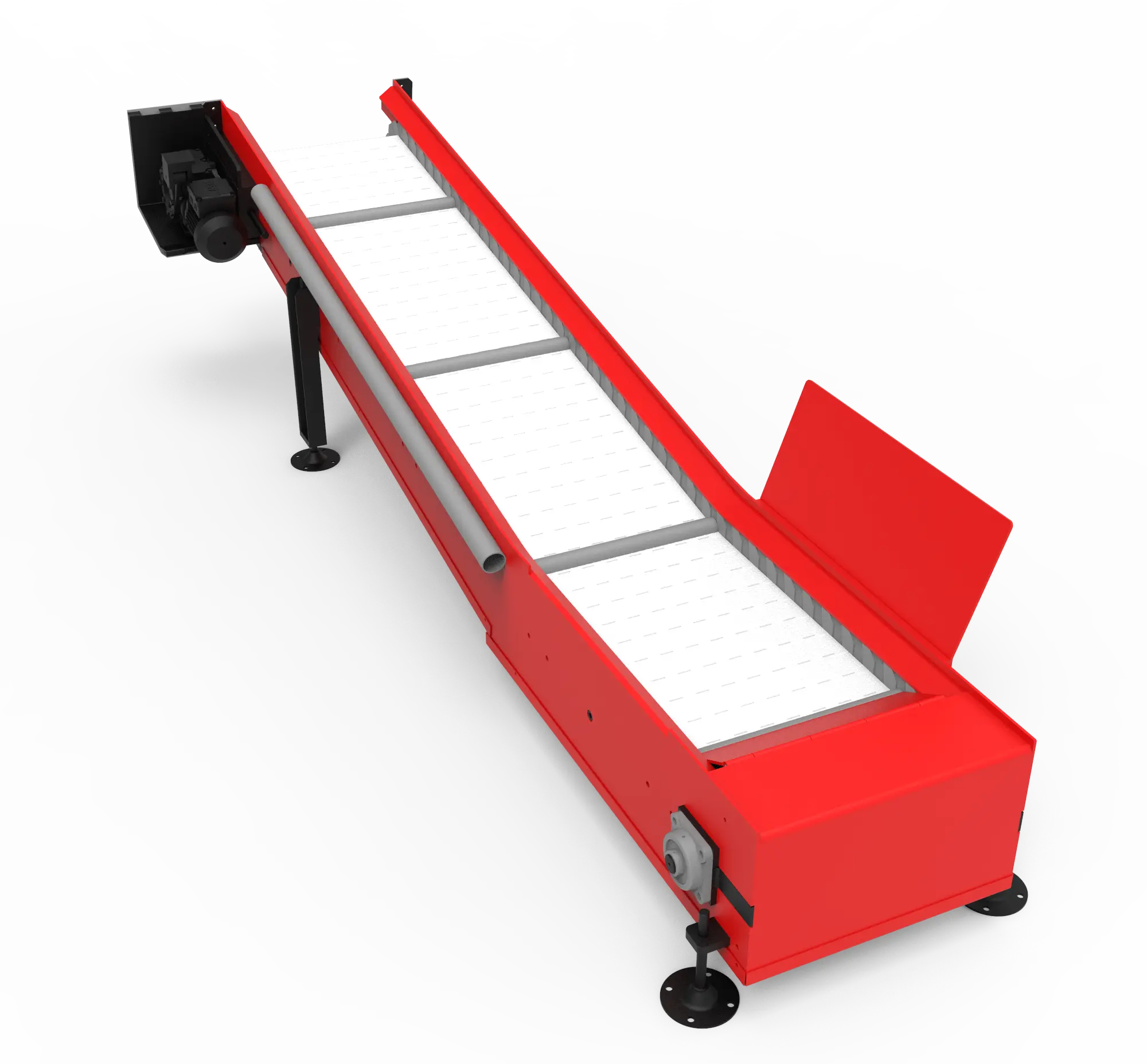
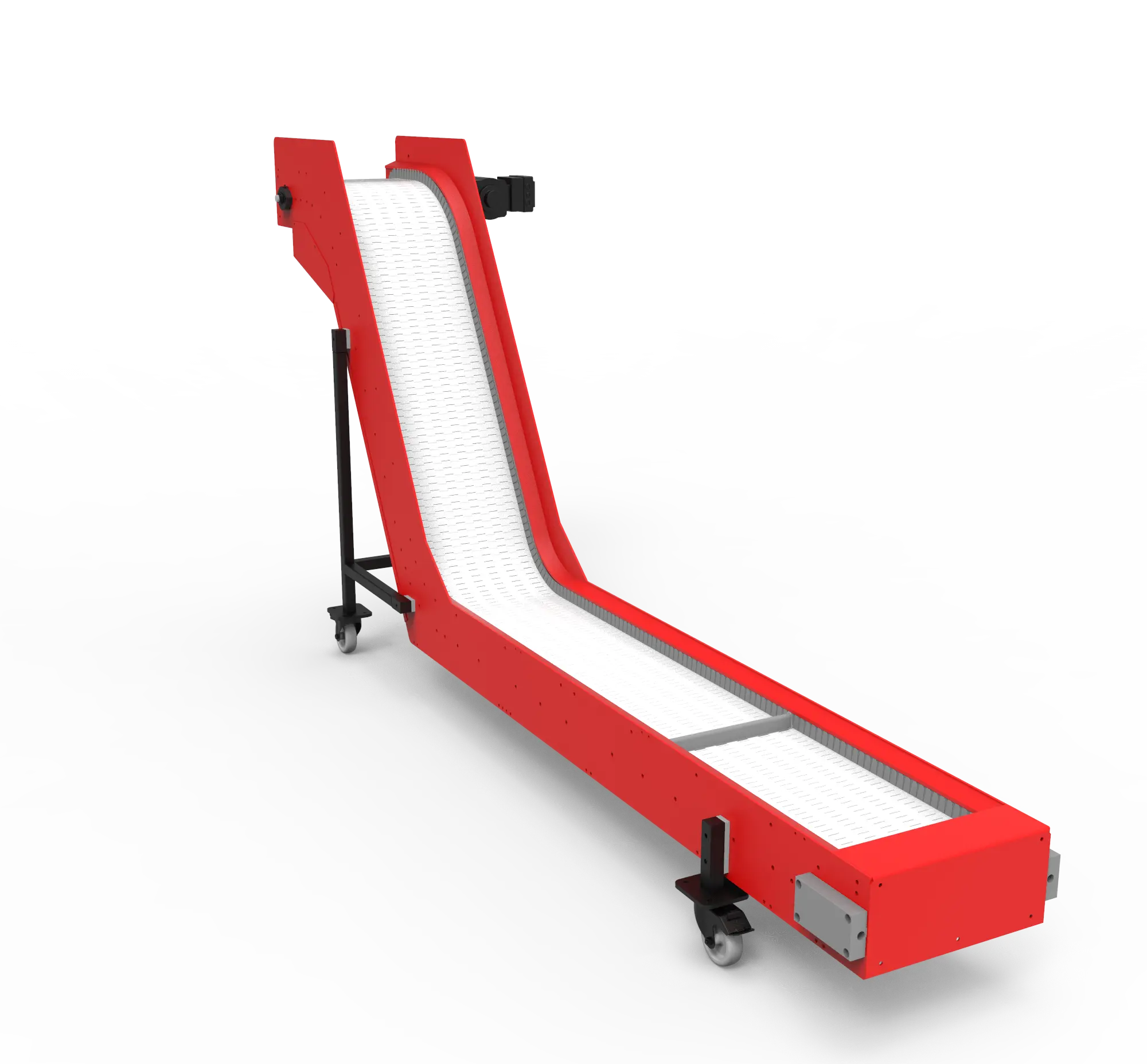
Optional features
The JOEST Hinged Belt Conveyor offers a wide range of optional features that allow precise adaptation to the conveyed material and application. From various Stamped or Welded Hinge Segments and customizable segment surfaces to flexible drive concepts, carriers, chain designs, and trough-edge configurations – the conveyor can be individually configured to ensure reliable, durable, and efficient operation in demanding industrial environments.
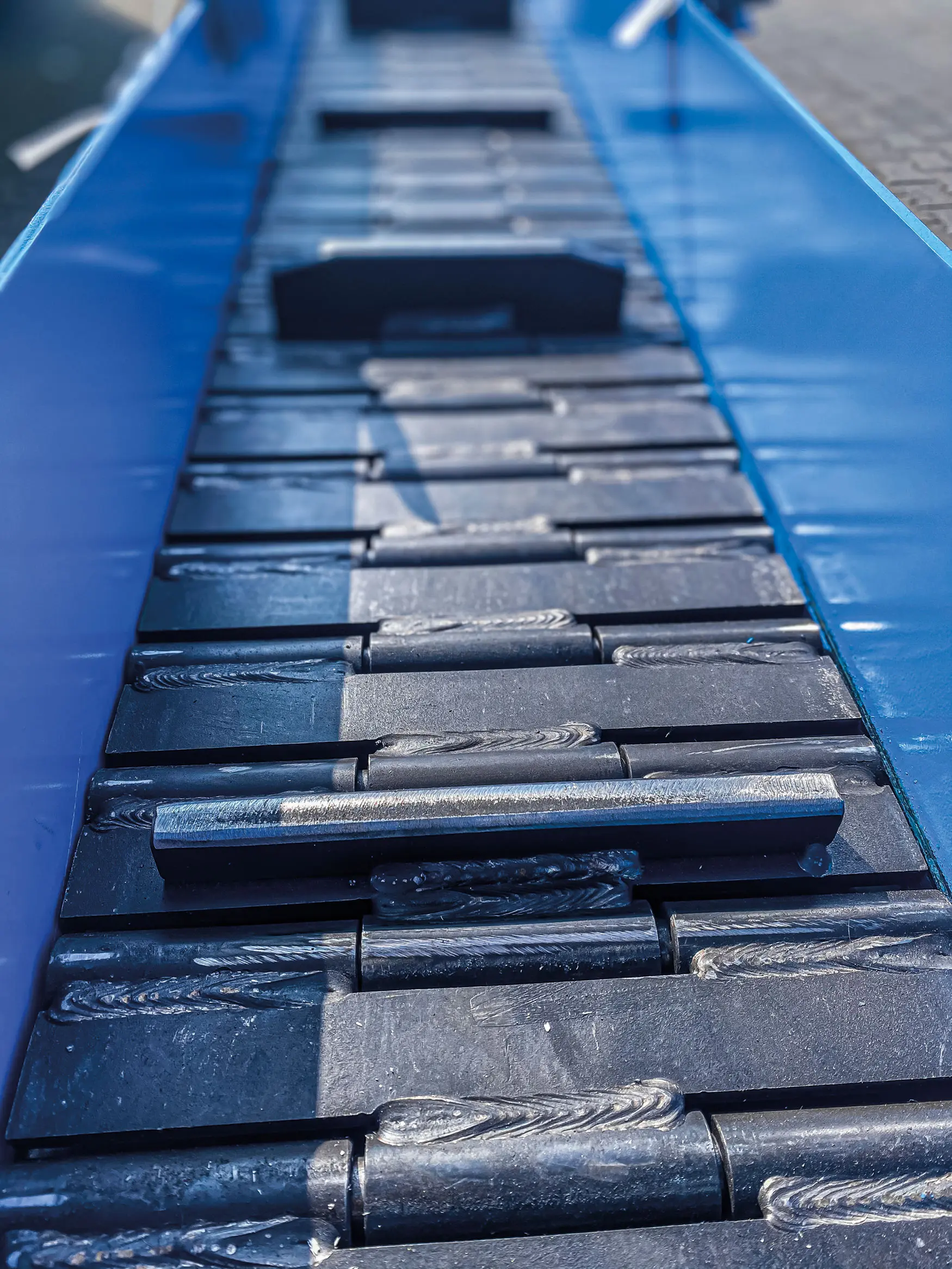
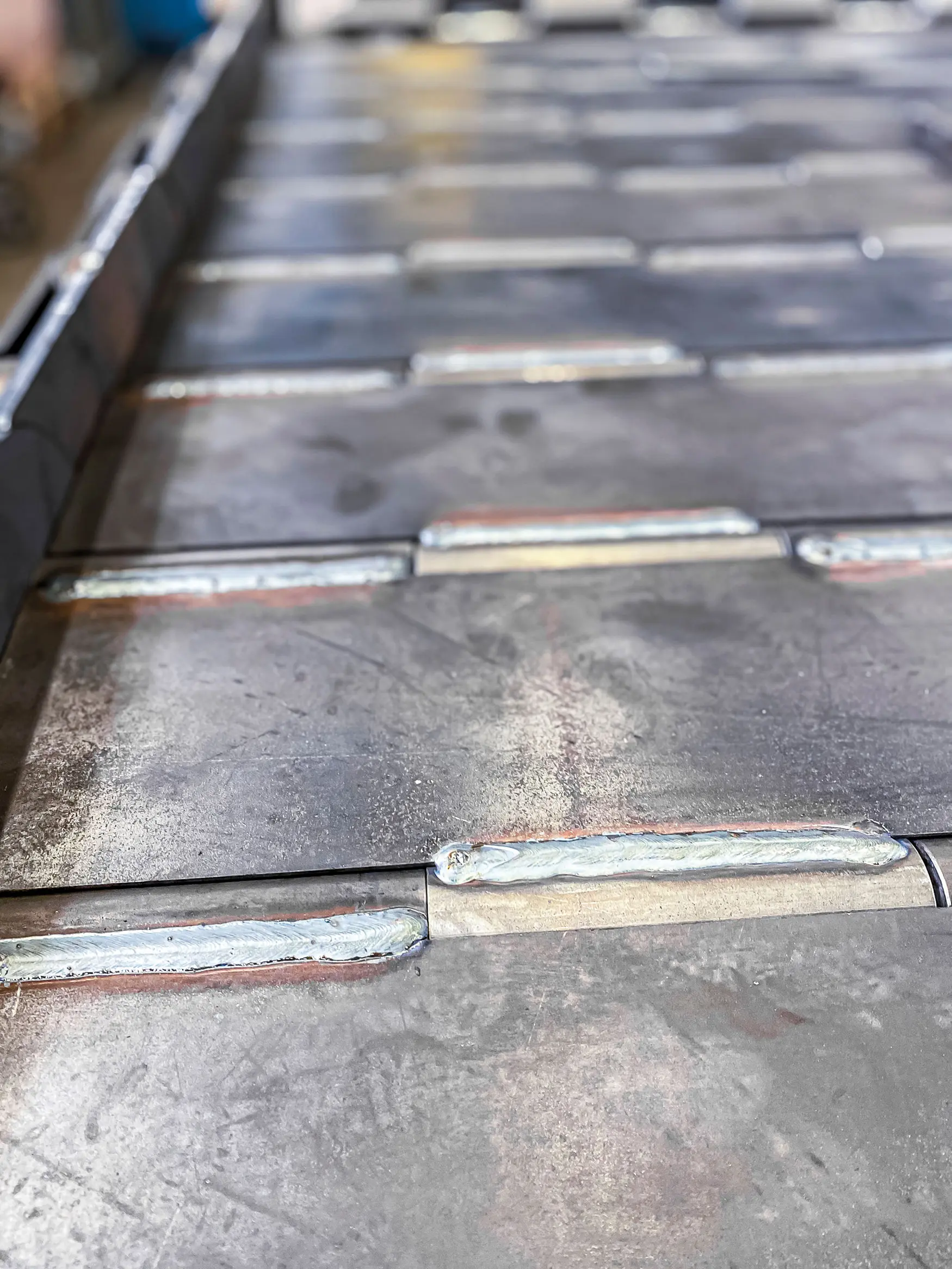
Welded Hinge Segments
Welded hinge segments ensure high stability and reliable conveying of demanding materials in the hinged belt conveyor.
Stamped Hinge Segments
Stamped Hinge Segments provide high stability and a flat belt surface that effectively prevents material from becoming trapped.
Segment Reinforcement
Segment reinforcements made of hard steel, steel profiles, or plastic increase stability and enable gentle conveying operation.
Multiple Lane
Multi-lane designs with separate belt strands ensure clean, contamination-free conveying, even for small conveyed parts.
Two Various Drives
Two drive options – with a mounted gear motor or chain drive – allow flexible adaptation, optionally with a space-saving polygon drive.
Surface and Side-Wings
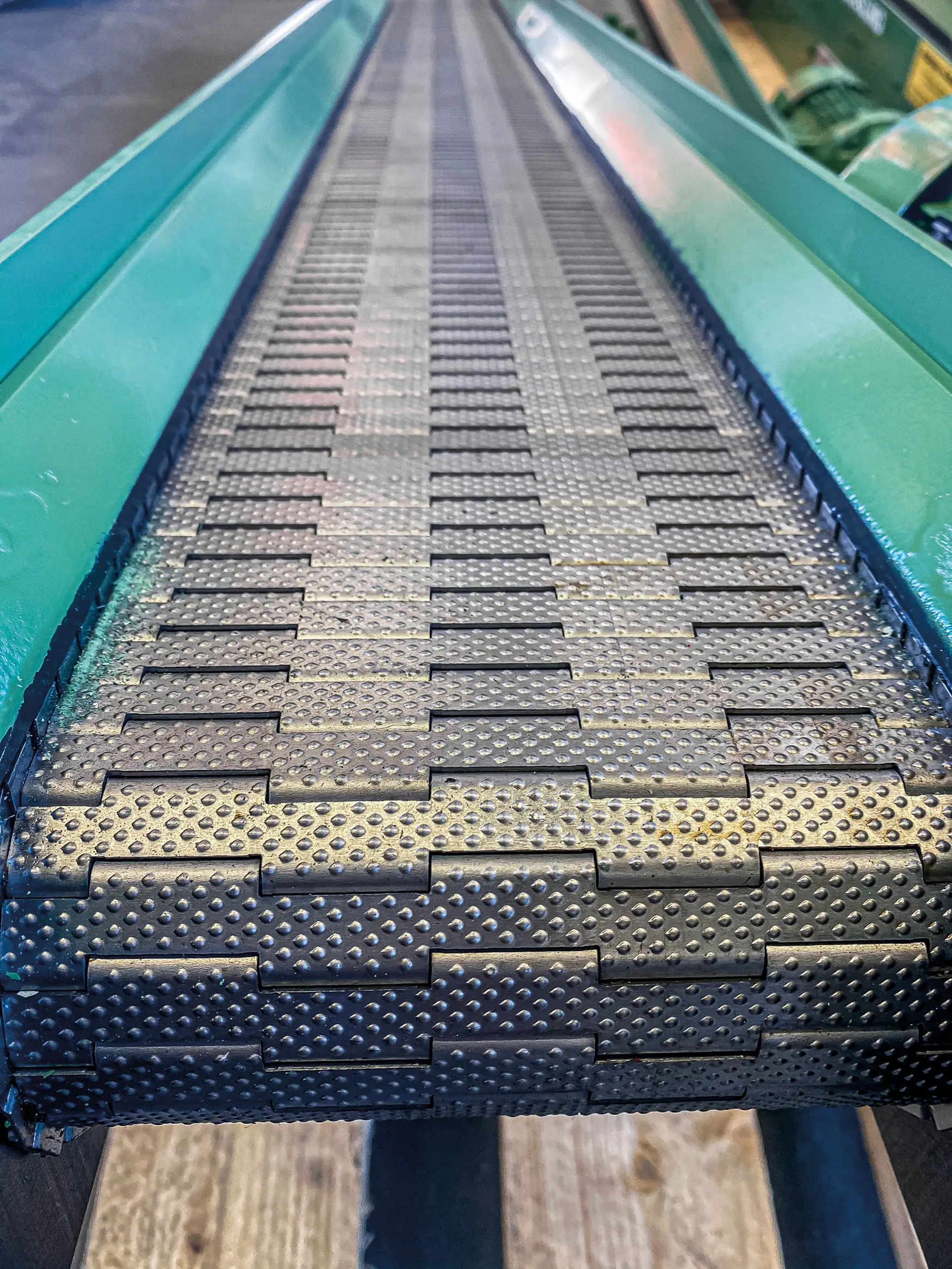
The segment surface and trough edge are adapted to the conveyed material – smooth, perforated, dimpled, or combined, with various trough-edge designs available.
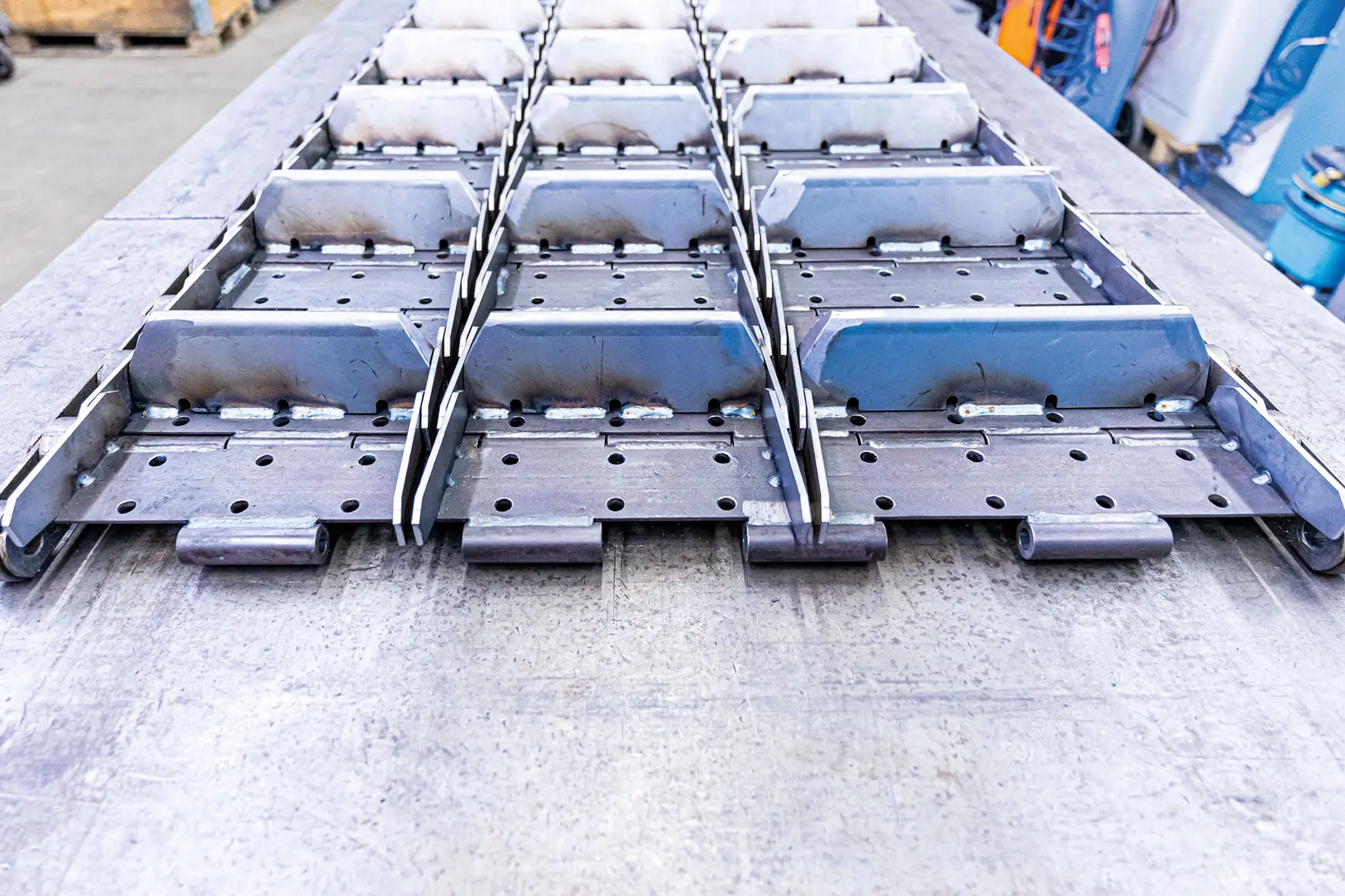
Carriers (flights)
Carriers are individually matched to the conveyed material, capacity, and incline angle – with plastic versions available for sensitive materials.
Chain Configuration
The chain design is adapted to the installation space and tensile force – with hollow-pin chains available in various sizes and configurations.
Advantages
Hinged belt conveyors are characterized by their particularly robust and durable design and, thanks to their well-engineered construction, offer numerous advantages for the reliable transport of a wide range of materials.
More robust than other designs
The robust steel construction ensures maximum load capacity and reliable continuous operation in industrial applications.
Continuous hinges on all effective widths (no pieced together smaller widths)
Continuous hinges across the entire width ensure stability and uniform force distribution.
Fast replacement of hinges
Easy hinge replacement allows short downtimes and reduces maintenance effort.
Hollow-pin chains without wear through tensile force
The hollow pins are designed for low wear and remain durable even under high loads.
Crossbars free of shear and bending stress
Optimized design minimizes stresses and increases the service life of the conveyor.
Optimal seal without overlapping contours through use of PS-side wings
PS trough edges ensure sealed, clean conveying areas without interfering edges.
Steel block rails (for sealing purposes and for guiding the material to be conveyed)
Solid steel block bars prevent material loss and ensure a reliable conveying process.
Hollow-pin chains with flanged rollers
The flanged roller ensures smooth operation, low wear, and a long service life.
Nearly maintenance free drive and tensioning components
Robust drives and tensioning systems guarantee reliable, low-maintenance operation.
Your Material. Our Test Center.
Before a solution reaches you, it is thoroughly tested in our in‑house technical center. Here, we test your materials under real‑world conditions and develop optimal, practical concepts.